Physisorption and Gas Separation
Warranty
Installation
Training
Product overview
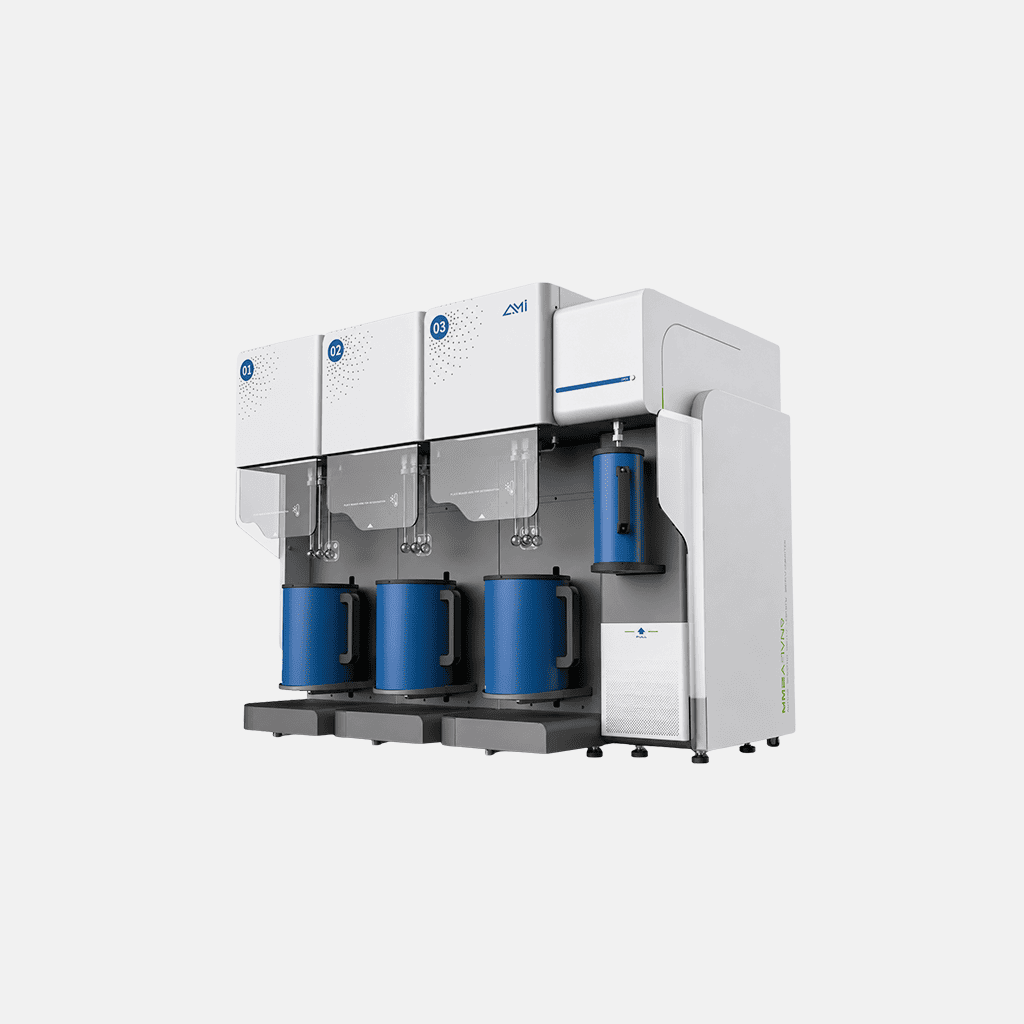
Every porous material tells its story through surface area and pore structure, and a reliable gas adsorption analyzer is how labs read it.
Physical adsorption, more often called physisorption, works on a fairly simple principle: weak van der Waals forces cause an adsorbate, either a gas or a liquid, to stick to the surface of an adsorbent material. There’s no chemical bonding involved, which is actually one of the things that makes this technique so useful. A physisorption analyzer takes advantage of that behavior to measure two properties that matter a great deal in materials characterization, surface area and porosity.
Because the interaction stays physical rather than chemical, it’s gentler on the sample and easier to reverse than chemisorption-based methods. That’s a big part of why physisorption analysis has become such a standard tool in labs working with porous materials, whether that’s for research or routine quality control. As a trusted physisorption analyzer supplier serving the UAE, Saudi Arabia, Qatar, Kuwait, Oman, and Bahrain, BDHME helps labs select the right instrument configuration for their specific sample types and throughput needs.
BET Analysis
This is where physisorption really earns its keep. BET analysis, built on physisorption principles, is used to determine surface area and porosity in materials like activated carbon, zeolites, and metal-organic frameworks (MOFs). It’s probably the single most common application people have in mind when they think about what a gas adsorption analyzer is actually used for.
Gas Separation and Storage
Solid surfaces can hold gases like hydrogen (H₂) or methane (CH₄) through physical adsorption, and this property turns out to matter quite a bit in energy storage research and gas separation work, fields where every bit of storage efficiency counts.
Impurity Trapping
There’s also a more everyday application here: physisorption is what allows activated carbon filters to trap impurities, something that shows up constantly in both industrial processes and environmental filtration systems.
Find the Right Solution for Your Laboratory
Need help selecting the right product for your application? Our specialists can guide you with product specifications, pricing, installation, and technical support across the UAE and Middle East.