

Simultaneous Thermogravimetric Analyzer (STA)
Warranty
Installation
Training
Product overview
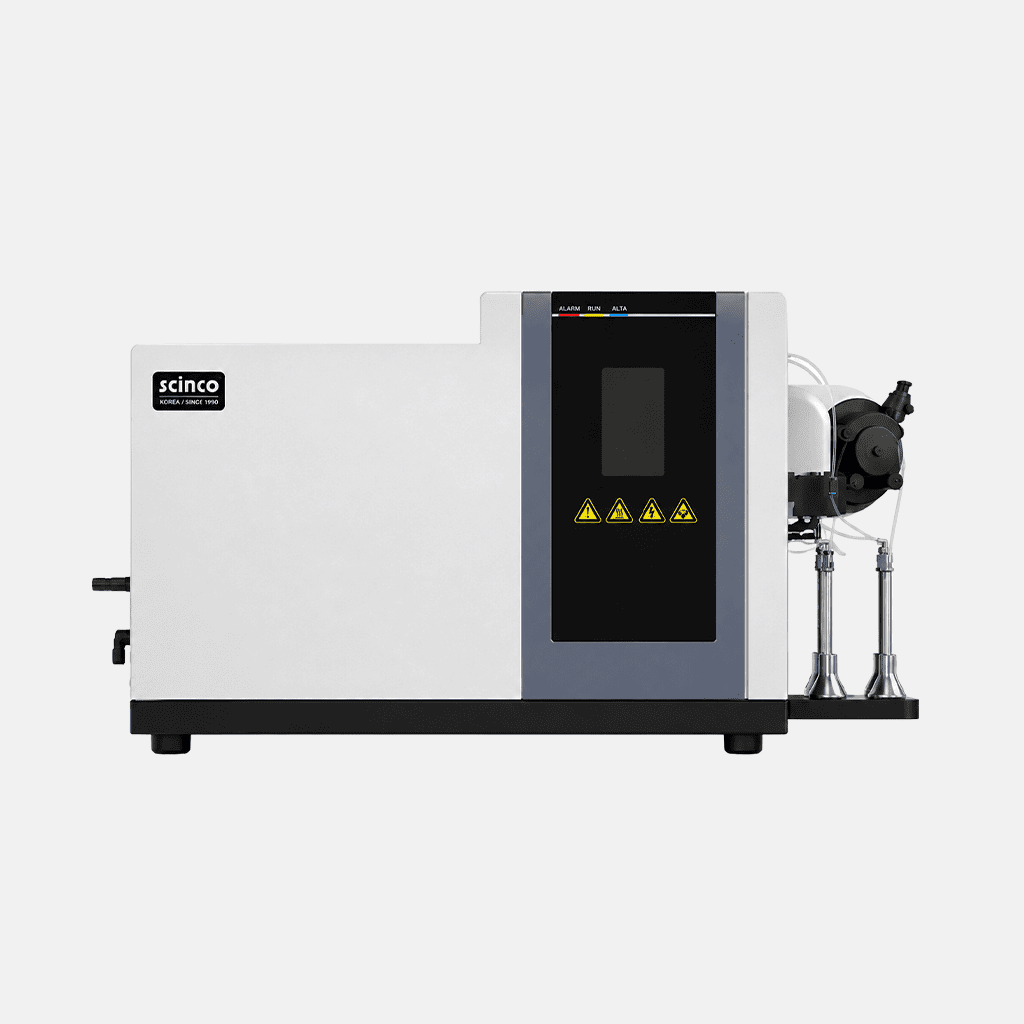
The simultaneous thermogravimetric analyzer is a device that performs a simultaneous thermogravimetric analysis using techniques like differential scanning calorimetry (DSC) and thermogravimetry (TGA).
A simultaneous thermogravimetric analyzer isn’t really two separate instruments bolted together, even though that’s basically what it started as. It combines DSC and TGA into one unit, and the useful part is that both measurements happen on the same sample, at the same time, under the same conditions. You’re not running one test, then a second test on a different piece of the same material and hoping the results line up.
As the sample sits inside a tightly controlled furnace, the software logs both weight loss or gain and heat flow continuously throughout the run. That gives you a single, complete thermal profile rather than two partial ones you’d need to stitch together afterward. It’s a small difference on paper but a fairly big one in practice, especially when a material’s mass and its heat behavior are changing at overlapping temperatures, which happens more often than you’d think.
This approach works well across a surprisingly broad range of materials. Polymers, composites, films, paints and coatings, grease, food products, ceramics, the STA handles most of them without needing a different setup for each.
PSA’s STA line comes in three temperature configurations, covering a range from -40°C up to 1500°C depending on which model fits your application.
A few things stand out across the series. First, it measures TGA and DSC (or DTA, depending on configuration) simultaneously, so you get comprehensive thermal analysis data from a single run rather than needing separate instruments or separate tests. Second, it’s been tuned for evolved gas analysis, with detection sensitive enough to pick up micro-scale mass changes that lower-resolution systems would likely miss entirely. Third, the micro furnace design cuts down on gas buoyancy effects, which in turn keeps the baseline more stable throughout a run, something anyone who’s dealt with baseline drift on older TGA systems will appreciate.
| Specification | -40°C – 650°C | Ambient – 1200°C | Ambient – 1500°C |
| Temperature | -40°C – 650°C | Ambient – 1200°C | Ambient – 1500°C |
| Programmed Rate | 0.1 – 100 °C/min | 0.1 – 40 °C/min | |
| DSC Sensitivity | < 1 μW | < 4 μW | |
| TGA Measuring Range | +/- 200 mg | ||
| TGA Readability | 0.1 μg | ||
| Thermocouple | Type K | Type R | |
| DSC / DTA Mode | Yes | ||
Find the Right Solution for Your Laboratory
Need help selecting the right product for your application? Our specialists can guide you with product specifications, pricing, installation, and technical support across the UAE and Middle East.